
Search This Supplers Products:pool pumpssolar pool pumpssand filterscartridge filterswater pumpspool equipments
Pool LED Lighting: Highlights & Selection Guide
publisherMAYGO
time2026/08/24
- Pool LED Lighting: Highlights & Selection Guide
1.Why Choose LED Pool Lights?
LED pool lights offer 80%–90% energy savings compared to traditional incandescent/halogen lights, last 30,000–50,000 hours (about 20 years), and operate at safe 12V or 24V low voltage.
2.Main Types of Pool LED Lights
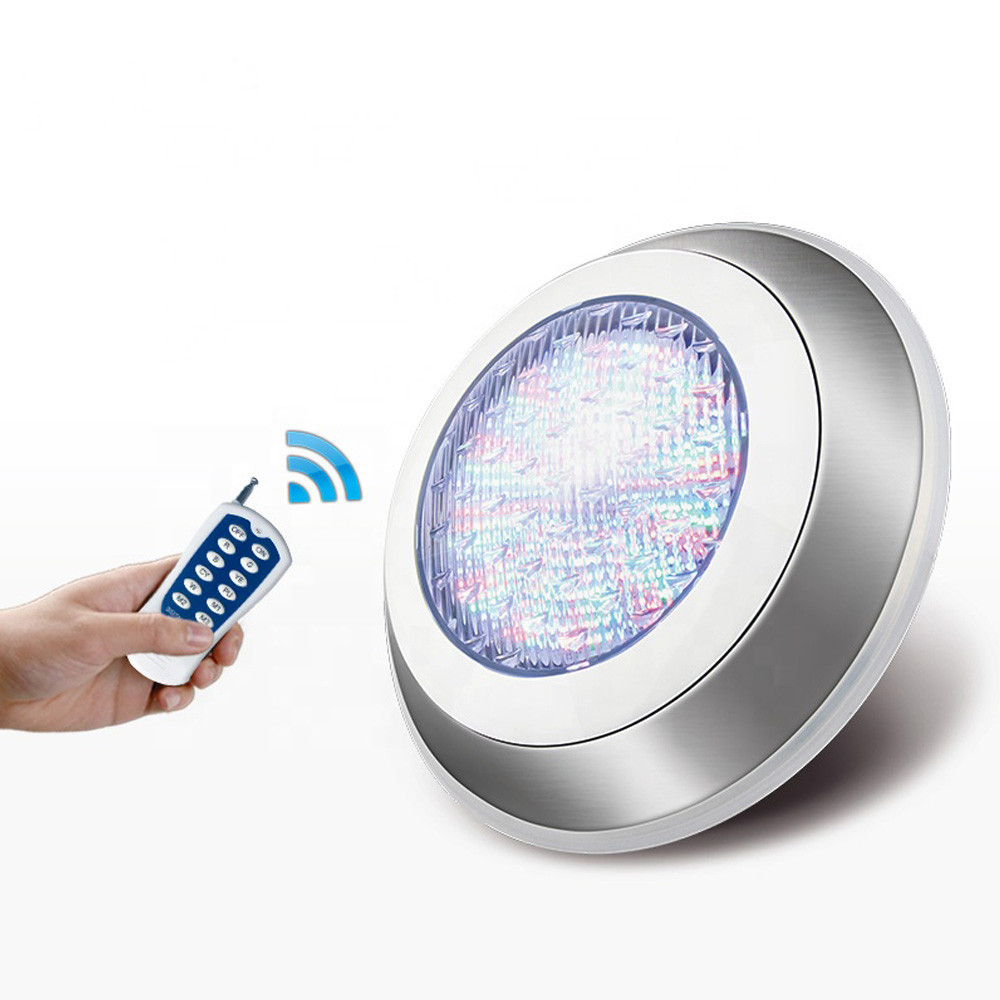
Types include: Niche/Flush-Mounted (seamless built-in look), Surface-Mounted (easy retrofit), Strip Lights (flexible edge lighting), Magnetic (cord-free for above-ground pools), and Floating lights (portable party ambiance).
3.Key Buying Parameters
1.Waterproof Rating — IP68
Underwater lights must be IP68 rated. Check the specific depth rating (e.g., IP68-5m means continuous operation at 5m depth). For pools and fountains, IP68-5m or higher is recommended. Look for pressure relief valves and ask for test reports (e.g., 10m/72h immersion test).
2.Voltage Safety — 12V / 24V
National standards require 12V or 24V low voltage for underwater lights — never use 220V directly. Use a dedicated transformer rated at ≥130% of total load.
3.Brightness — Lumens
Look at lumens, not watts — lumens measure actual brightness. Quality LEDs achieve 80–120 lm/W. Pentair's guideline: 4 lumens per square foot of pool surface. A single fixture typically provides 1,000–2,000 lumens.
4.Color Temperature
Warm white (2700K–3000K) creates cozy ambiance; cool white (4000K–5000K) makes water appear clearer; RGB/RGBW enables full color-changing effects.
5.Color Rendering Index (CRI)
For public/large pools, choose lights with CRI ≥ 80 for clear underwater visibility. Premium projects may opt for CRI > 90 for superior clarity.
6.Material — Corrosion Resistance
Pool chemicals (chlorine/bromine) are highly corrosive. 316/316L stainless steel (with molybdenum) offers superior chlorine resistance. Quality LED chips maintain >90% lumen output after 3,000 hours underwater.
7.Power & Quantity Reference
Small pools (~10㎡): 10–15W per light. Large pools: space lights 1.5–2m apart, 20–30W per light. Install 4–6 lights per 25–35㎡, typically <5m deep and >45cm below water surface.
4.Smart Control
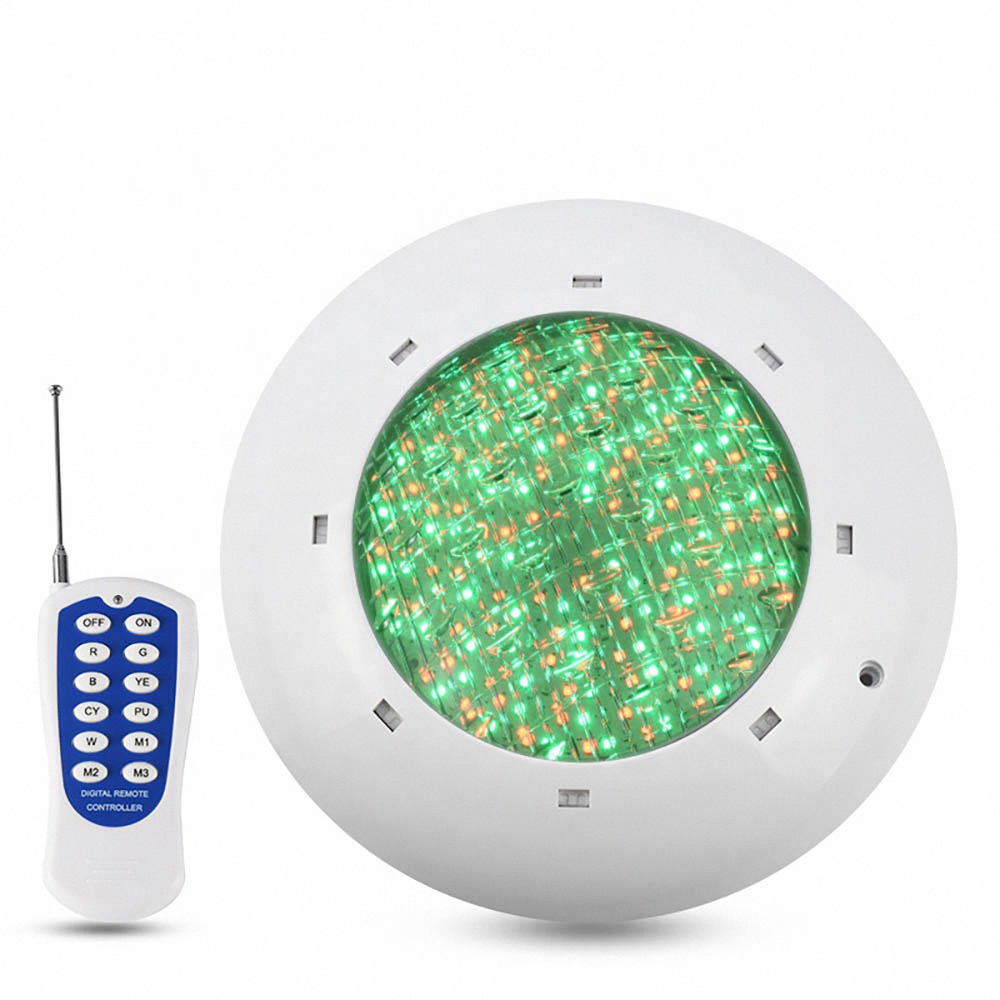
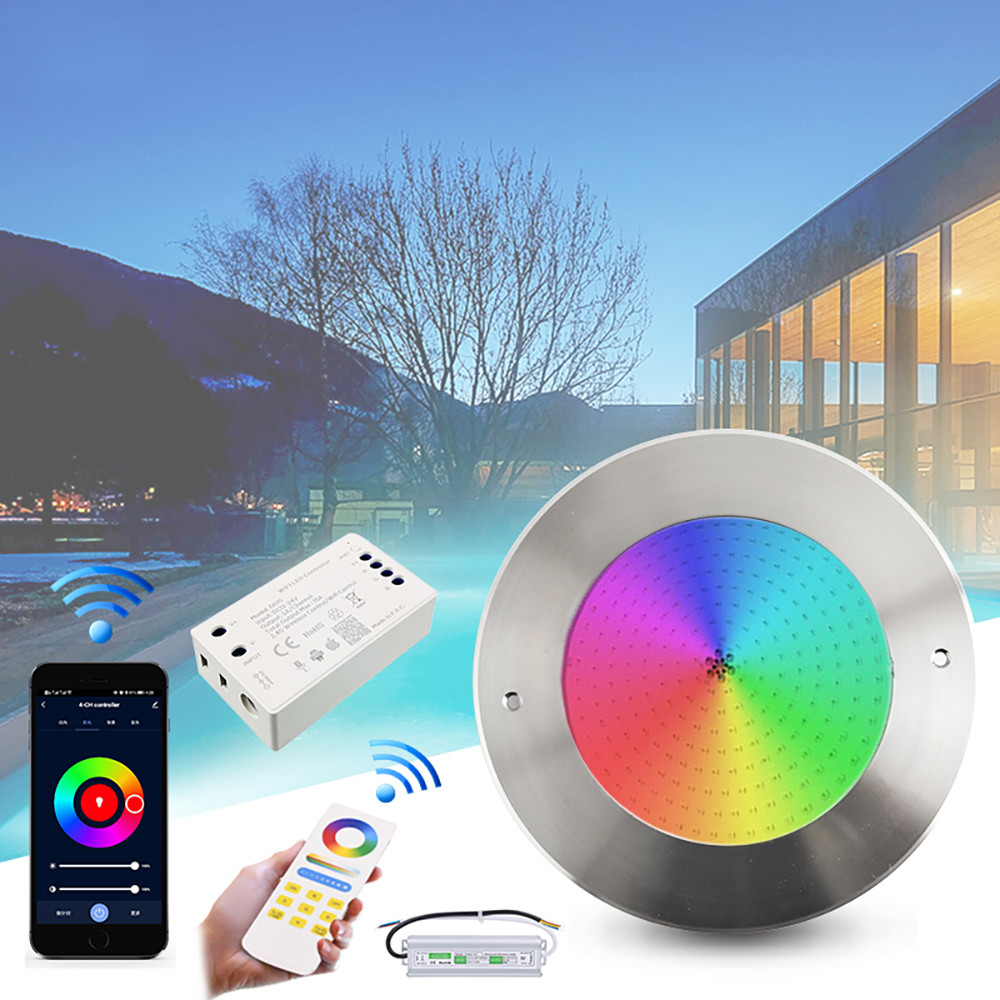
Modern LED pool lights offer remote, smartphone APP, and smart home integration. DMX512 enables professional programming for precise color control and synchronized dynamic effects.
5.Installation Safety Tips
Hire a licensed electrician with pool system experience. Power down before installation. Never test low-voltage lights with 220V. Use waterproof junction boxes and sealant. 120V lights require GFCI protection. Never run underwater lights out of water — they overheat instantly.